

Your Professional Bun Pan Supplier
We are your professional Bun Pan manufacturer, Jiangsu Tianxiang Baking Appliance Co., Ltd. was established in 2002, located in Qingpu District, Shanghai, the company specializes in the research and development, production and sales of high-end baking utensils such as baking trays, bread trays, cake trays, carts, etc., especially good at providing professional baking utensils solutions for medium and large industrial food production enterprises.
Why Choose Us
Our company
Jiangsu tianxiang bakery products co., ltd. Is located in baipu town, one of the top 100 towns in jiangsu province, with fertile land, convenient transportation, convenient communication and good investment environment, the factory covers an area of 48,000 square meters and has more than 200 employees.
Our equipment
The company has dozens of large-tonnage stamping equipment, advanced laser cutting equipment, 4 automatic punching machines, argon arc welding machines, automatic welding robots, sandblasting equipment, super-large spraying equipment, extended ovens and other more than 100 sets of equipment.
Quality assurance
The production workshop is equipped with stamping, welding, painting and other workshops, which strictly control every link in the production process and refuse third-party processing to ensure product quality.
Our services
We have an excellent sales and service system, including pre-sale, in-sale and after-sales service.


Bun Pan Materials

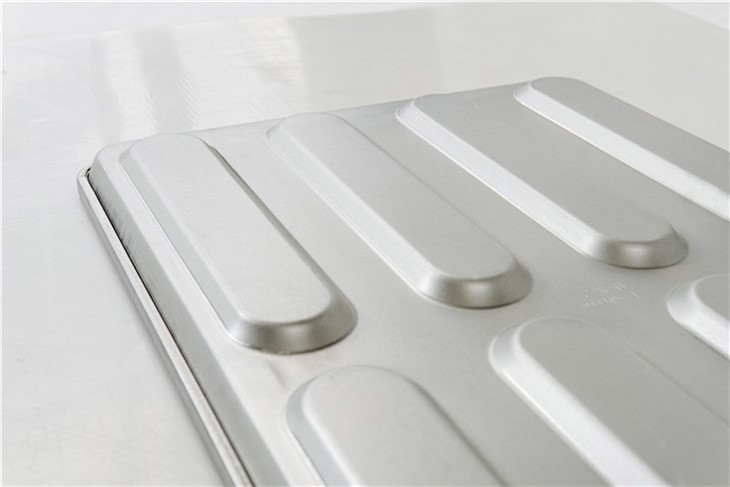
Aluminum
Efficient heat conducting makes this baking pan material the top choice of most chefs and bakers. That means the pans heat up and cool down fast. Because of its naturally light colour, aluminum pans promote minimal browning, keeping your cookies the perfect golden brown.
Aluminum can be scratched, so, do not cut foods on your pans; remove to a cutting board instead to maintain the pan's surface. Also, remember that aluminum doesn't like acidic foods as they can cause discolouration and pitting when in contact for long periods of time. Using pan liners can help avoid this issue – not to mention make cleaning up easier.
Stainless steel
Although extremely durable, stainless steel is a poor conductor of heat. However, stainless steel is resistant to stains and looks great even after repeated use. This allows these pans to go from oven to display.

Nonstick coated
These bun pans have a finish that is designed to minimize the amount of fats and oils needed to bake, roast and cook food items. Nonstick coated pans are typically aluminum with a nonstick coating applied to the interior of the pan. Nonstick pans tend to be darker in colour which lead to crisp and browned crusts. Bake times and/or temperatures may need to be adjusted to compensate. Nonstick pans need to be treated with care to minimize damage to the coating.
Bun Pan Features
Gauge
The gauge refers to the thickness of the metal used to make the sheet pan. The lower the number, the thicker the metal. We know, it doesn't make sense, but that's just how it is. The thicker the gauge the more durable the bun pan and less prone to warping, scratching and denting.
Edges
There are multiple types of edges available for bun pans each with pros and cons.
Flat/rimless
Exactly what you think it means, these sheet pans have no rims or at least one side with no rim. This feature allows bakers to easily slide baked goods off the baking tray onto a cooling rack or onto displayware.
Rimless sheets have limited use as they cannot contain batters or liquids.
Tapered
These edges or sides are angled. Two benefits to this feature are the ability to contain batters and liquids and the ability to stack pans of the same size. A space saving necessity for most kitchens.
Rolled
The baking tray edge is rolled under. The sides are typically also tapered. Rolling the edges increase the stability of the pans and they keep their shape after repeated use.
Rolled wire filled
Going a step further than the rolled edge, these pans have wire rolled into the edge adding even more stability and reduction in warping under high volume conditions. Also, the bun pan can be referred to as wire rimmed bun pans.
Open
The edge of the sheets are curled and left open. The curl assists in keeping the shape, but with the open curl it allows for easy cleaning as no food can get trapped.
Make home-made bread
Stay true to the loaf pan's primary use by baking a loaf of bread. While this May not be as quick and convenient as buying bread from a bakery, you'll have full freedom with the ingredients that go into your bread.
As such, you can experiment with making a loaf that's either low-carb, high-protein, or gluten-free—or all three.
Bake pound cake
A pound cake is the perfect baked good to make when you're short on time. Simply mix all the ingredients together, pour the mixture into your loaf pan, and bake for some 20 minutes. As a plus, this is an incredibly versatile baked good, giving you full creative freedom with the ingredients.
Cook a meatloaf
If you're making a meatloaf, then it's very likely that your recipe will call for a one-pound loaf pan. For those days you're not making baked goods, a loaf pan is an incredibly handy kitchen tool that will get dinner on the table in no time.
Bake a mini casserole
If you're making dinner for one or two people, then it might seem a bit much to use a whole casserole dish—unless, of course, you're planning on leftovers. If that's not the case, then a loaf pan is the perfect way to downsize any dinner dish that requires baking, such as a savory casserole.
Freeze ice cream
Making ice cream is a multi-step process. After you churn it using your ice cream maker, you have to freeze it for a few hours. Only then is it ready to be scooped up and eaten. To freeze it, a loaf pan is typically the ideal material that will quickly make your ice cream cold.
Our Certificate


FAQ
We're well-known as one of the leading bun pan manufacturers and suppliers in China. If you're going to wholesale high quality bun pan at competitive price, welcome to get more information from our factory.
Custom Hot Dog Trays, bun roll tray, baking tray OEM and ODM